Solo Performance Reflection (02/08/2020)
The solo performance was one that was satisfying to perform, seeing as it was the last one of my high school experience and so it was one that I wanted to nail as a final hurrah. I prepared for hours at a time each day for this performance, being inspired by Samuel Beckett and his theatre of the absurd. I thought it was interesting how a theatre managed to change my perspective on theatre so vividly, because I realize now that theatre is not meant to have absolute opinions on theories and the like. There was admittedly a lot of pressure on me because I am often regarded as one of the better actors in ISS, and so not being able to create a solo performance that did not manage to blow expectations out of the water would have resulted in disappointment from a lot of people but especially myself.
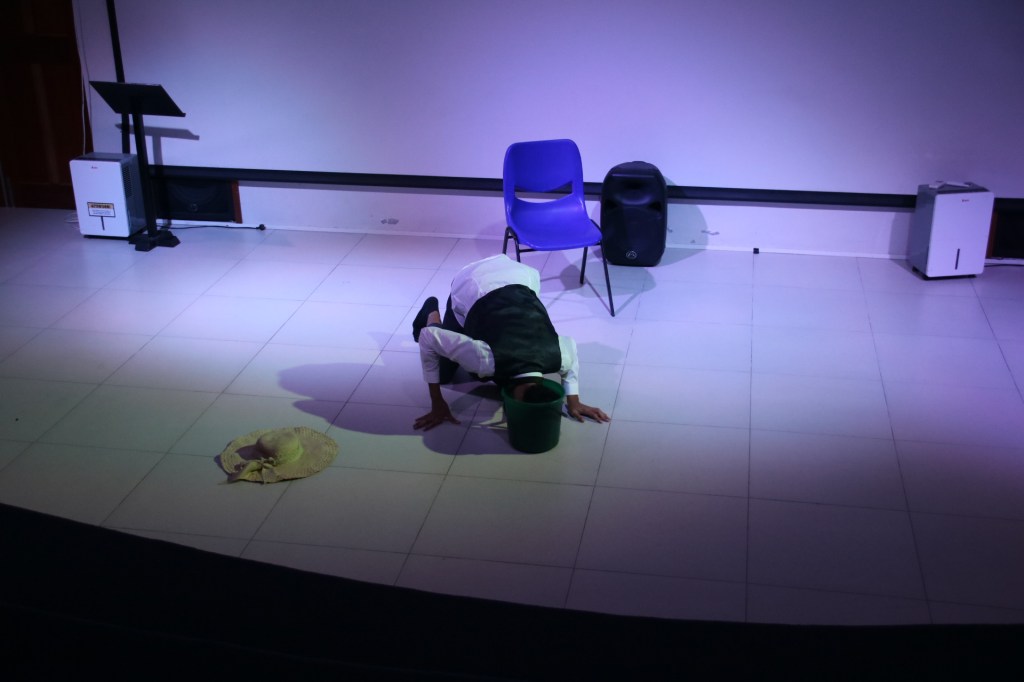
For the performance, I purposely refrained from performing vigorously until just a couple of days before the monologues because I wanted to be able to surprise myself. I believed that getting bored of repeating my performance over and over would cause the audience to resonate these feelings, and so I did not even perform when I had theatre class for the majority of the duration of the assignment. Overall, I felt like I achieved my goals with this performance, and if I happen to perform in the future I know that I’ll be able to adapt to my situation well just like I had done with this performance.
Theatre had always been a subject where I thought that the immersion of the audience into the piece was such an integral part of the performance. This is why practitioners such as Konstanin Stanislavsky and Lee Strasburg were particularly important to my monologues in the past, as I could utilize their methods to identify with my character and the script better. This would allow myself to emphasize those parts of my personality that I needed for that scene, such as if my character needed to be depressed or haggard. For this last act that I would do, I wanted to create something that went against these conventional means that I had become associated with during my time in theatre class. First, Augusto Boal was chosen, but it was decided that his theory was too similar to more submerged acting theorists and so more investigation was required. This led me to discovering Samuel Beckett and the Theatre of the Absurd, wherein the objective of the performance was to be as ridiculous and as confusing as possible.
This was interesting because it followed the criteria that I wanted while also giving me the opportunity to produce a creative performance due to how broad the theatre can be in terms of the plays it generates. The Theatre of the Absurd was the most popular in the 1950s, calling plays like “Waiting for Godot” ones where nothing happens, yet it still manages to keep their audiences captivated by the performance. Waiting for Godot additionally is regarded to be one of the best plays of the twentieth century, which led me to believe that immersion in theatre is not necessarily important to create a drama piece that still provides a meaning and keeps the viewers entertained.
After some exploration of other famous Theatre of the Absurd performances, I discovered a one act play written by Samuel Beckett called “Endgame” which managed to portray most of the elements of Theatre of the Absurd in a short timeframe. This would be perfect, as the solo performance for the IB was only supposed to be between four and eight minutes long. I created my script with Endgame in mind as I had never written something that was supposed to be as bizarre as a Theatre of the Absurd performance before. This included using elements such as the repetition of lines and plot points, (For example when my character tries to find a comfortable seating position) breaking the fourth wall on purpose, (Asking the audience for a whiteboard and marker) and a plot that does not follow the typical narrative structure. (Having rising action, climax etc.) The final result of the script can be called something that follows the conventions of Theatre of the Absurd and as such was very unusual to the audience as they were used to more traditional plays that rely on the setting and characters to immerse themselves.
The elements of the monologue were meant to make little sense as well. The staging and set design was meant to be as minimalist as possible, which I found to be similar to Noh Theatre, another practice in which the elements of the play are also minimal in order to put emphasis on the actors. As a result the set only had a bucket, and a chair on stage, and it was up to the audience to decide where the story takes place as the setting is not directly referenced in the solo piece. This also affected the lighting of the act, as often the lights accompany what is shown in the scene. The lighting was hence kept white to keep the focus of the scene onto the monologue itself. No sound effects were also used for the same reason, as was the use of no make up in the show. The costume was decided to be a suit as that could be a general set of clothing that may also be unusual to the audience.
The performance itself was very successful as the feedback received from the audience was extremely positive, praising all of the tasks and elements that I had set out to do. For example the main character was not meant to be a one dimensional person, instead representing many different ideas. The audience picked up on this, adding that this characterization added more to the performance as they were more invested in the piece. Another piece of feedback was how I kept my composure when a classmate I asked to assist me slipped during the performance, causing the audience to burst out in laughter. This meant their immersion was not fully broken because the person leading them throughout the performance did not break their own investment in their performance. One element that I wished I could have had more time to develop was my use of lines, as throughout my performance I said lines that were meant to be later in the scene earlier and vice versa. Thankfully, the audience did not notice this fact as the performance was not one that required the lines to be in order to be understood.
Because of the nature of the Theatre of the Absurd, all of the elements used in the performance were either nominal or made relatively little sense in regards to the audience. Absurd Theatre is meant to promote existentialism, which is a philosophical theory wherein the person is able to express their own individuality through acts of the will. Something that I believe I have achieved by breaking off from the norm of other theatre practitioners. The juxtaposition of this play and what the audience originally expected in likely a linear solo performance should have helped achieve my objective of surprising this audience with creating a new theatre artform that changes their beliefs on theatre, and hopefully can inspire them in their own performances in the future.
 Sean's Drama Journal 2020